Whiteboard Animation Video: When It Works and What It Costs
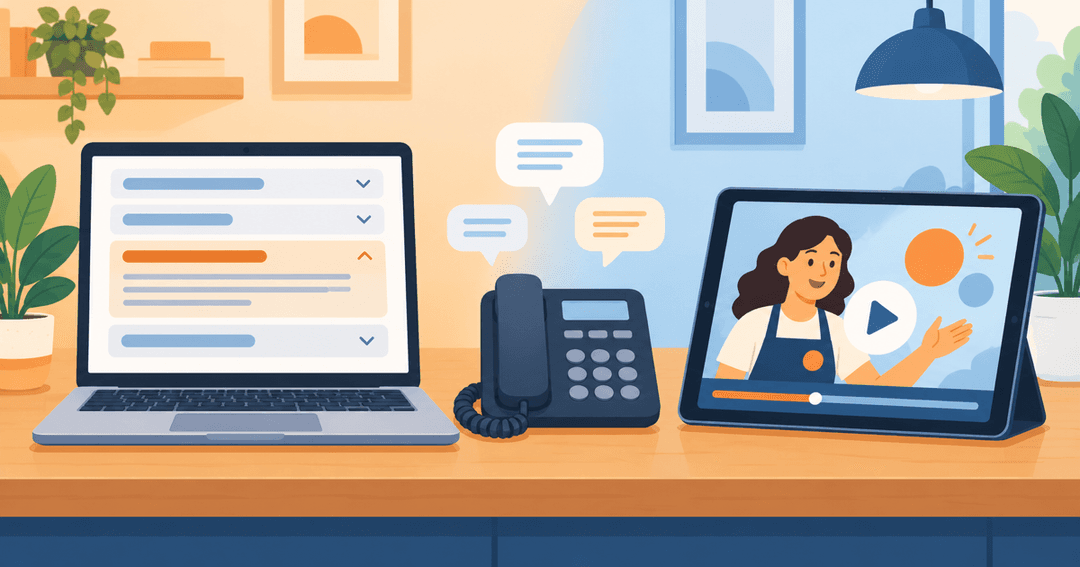
Some of what you sell is hard to explain. How a living trust works, what happens after a car accident claim, why a heat pump still heats your home when it's freezing outside.
You could write a long page about it, but most people won't read it. That's frustrating when the customer who does understand usually books.
The good news is that a whiteboard animation video was made for exactly this job. It isn't the right pick for everything, though, and the price guides online make it look far more expensive than it needs to be.
Here is what this guide covers: what the style is, a 3-question test for whether you need it, what a 30- or 60-second video really costs from DIY to studio, a script template, and verdicts for 10 kinds of business.
A whiteboard animation video is a short video where a hand sketches simple pictures on a white background while a voice teaches one idea, step by step. It earns its place when you explain something complex, like a legal claim or a medical procedure, to people who must trust you first. For a simple "call us today" message, a plain animated explainer works just as well.
Key takeaways
- Use whiteboard to teach a process, not to grab attention in an ad.
- 60 to 90 seconds is the usual length, which is about 130 to 225 spoken words.
- Studio guides quote per minute, often $1,000 to $5,000 or more, but a small business rarely needs a full minute.
- Doing it yourself looks free, but it takes hours of your time per video.
- Put it where people make a decision: a service page, a quote follow-up or a waiting-room screen.
What is a whiteboard animation video?
A whiteboard animation video is a hand sketching simple pictures on a plain white background, one at a time, while a voiceover explains the idea as each picture appears. It feels like watching a teacher at a whiteboard, except every line lands exactly on cue with the words.
Most of it is made with software that imitates a drawing hand today. The style goes back to UPS's whiteboard TV ads, and Wikipedia's history of the style notes that the Royal Society of Arts began turning talks into whiteboard animations in 2010.
It is one of three common styles used in explainer videos. An explainer video is a short video, usually under two minutes, that explains what a business does or how something works. Pexo's guide to explainer video types sorts them like this:
- Whiteboard animation is the budget-friendly workhorse for step-by-step teaching and professional services.
- 2D motion graphics use full-color scenes, characters and backgrounds, and they're the all-round style.
- Live action adds a real face or product on camera.
Most explainer videos, whiteboard or not, run 60 to 90 seconds. That works out to roughly 150 to 225 words of voiceover, according to Knowlify's guide to making an explainer video. It's less than most owners expect, so every sentence has to earn its spot.
Need a whiteboard video? Get a 30-second whiteboard video for $197 → We write the script, record the voiceover and draw the hand-drawn animation, delivered in 7 days.
Do people really remember more from whiteboard videos?
Some research suggests people remember a little more, but the evidence is mixed, so don't buy the style for a memory boost alone. Buy it because it slows a hard idea down.
Vyond's how-to guide cites psychologist Richard Wiseman, who found that people who watched a whiteboard animation recalled 15% more information than people who watched a talking-head video. That's a real finding worth knowing.
The other side matters too. Wikipedia summarizes a 2016 study in Computers & Education that found little to no compelling evidence that whiteboard videos beat other formats for learning, motivation or persuasion.
So here is the honest version. Whiteboard helps when the drawing does real teaching work, like showing a pipe being relined without digging. It won't rescue a muddled message.
When should you use whiteboard animation? A 3-question test
Whiteboard animation works best when your job is to teach: a process, a legal or money idea, staff training, or a problem where people need to trust you as the expert. Answer these three questions before you order anything.
- Does your idea have three or more steps? If yes, whiteboard shows each step as it's drawn. If it's one line, like "we fix leaks fast," it doesn't need a drawing hand.
- Must people trust you before they act? Legal claims, medical procedures and big home repairs all fit. Impulse buys don't.
- Will people watch it on purpose? A service page, an email after a quote or a waiting-room screen gives the drawing time to breathe. A social feed doesn't.
Three yeses means whiteboard is a strong fit. One or none means a full-color 2D explainer will do the job better.
Skip whiteboard animation if you need:
- A fast product demo where people want to see the real thing move.
- A quick social media ad meant to grab attention in three seconds.
- A polished, branded look with your logo colors and a consistent character.
Pro tip: many businesses use both. Whiteboard teaches the process on the service page, and a short 2D video sells the service on the homepage.
How much does a whiteboard animation video cost?
A whiteboard animation video costs anywhere from a few dollars in software to several thousand dollars per minute at a studio. What you actually pay depends far more on who makes it than on the style.
The catch with most price guides is that they quote per minute, for corporate videos that run two or three minutes. Here are the 2026 numbers, then what they mean for a 30- or 60-second video.
- Knowlify's whiteboard cost guide puts a full production agency at $1,000 to $5,000 or more per minute, with 4 to 8 weeks of turnaround. Freelancers run $200 to $1,500 per minute, and DIY software roughly $0 to $100 per finished minute.
- B2W's cost guide lists real studio projects, such as a 2-minute video for Epicor at $4,000 (200 hours) and a 3-minute video at $4,800. It quotes 3 to 6 weeks from script approval.
- Flearning Studio's guide puts the average at around $4,250 per minute.
- Golpo's guide says DIY software costs $25 to $100 or more a month, plus 3 to 8 hours of focused work per finished video.
For a whole-market view, Yum Yum Videos' cost guide runs from about $99 for do-it-yourself tools up to $50,000 or more for enterprise brand films.
The side-by-side for a small business
| Option | What a 30 to 60 second video costs | Turnaround | Your time | Best for |
|---|---|---|---|---|
| DIY software | $25 to $100+ a month, plus your hours | Hours to days | 3 to 8 hours per video | Owners who enjoy editing and have a free weekend |
| Freelancer | $200 to $1,500 per minute | 1 to 3 weeks | Briefing, chasing and approving | Someone with a script already written |
| Studio or agency | $1,000 to $5,000+ per minute | 3 to 8 weeks | Several meetings | Longer training or corporate videos |
| Our done-for-you whiteboard | $197 for 30 seconds, $397 for 60 seconds (normally $597) | 7 days | About 30 minutes to fill in a brief | Local businesses that want one clear video |
| 2D animated explainer (not whiteboard) | $297 for 30 seconds, or $5,000 to $10,000 for a custom 60-second studio build (Vidico) | 7 days (our package) or weeks (custom) | Varies | Homepages and ads |
Note that Vidico's $5,000 to $10,000 figure is for a custom 60-second animated explainer from a North American studio. It isn't a whiteboard price, so treat it as a 2D benchmark.
Here is the worked math on DIY. Say you run an accounting practice and bill $120 an hour. Five hours in whiteboard software costs you $600 of lost billable time, before you've paid for the tool or a voiceover.
How long should a whiteboard animation video be?
Most whiteboard videos should run 60 to 90 seconds, because each drawing needs a few seconds to appear before the voice moves on. Shorter works only when you teach one small idea.
Yum Yum Videos' length guide says 30 to 45 seconds suits awareness campaigns and ads, while 60 to 90 seconds suits website and sales use. Whiteboard almost always needs the longer end of that range.
For word counts, WhiteboardAnimation.com's pricing page says about 130 words can be spoken in a minute. That gives you about 65 words for 30 seconds and 130 for 60. Leave a little slack, since the hand needs time to finish each picture.
Our guide to the ideal explainer video length goes deeper on picking 30, 60 or 90 seconds.
How to script a whiteboard animation video
Every simple explainer script follows four parts: a hook, the problem, the solution and a call to action. Biteable's explainer video script template lays them out, and for whiteboard each part maps to one drawing on the board.
- Open with a hook that names the problem. Give the hand time to draw the scene while you say something like "getting hit with a surprise tax bill is stressful." One clear sentence, one simple image.
- Show the problem getting worse. Draw what happens if nothing changes, like a stack of bills growing taller. Watching the problem build up makes it feel real.
- Reveal the solution as the hand draws it. As your service gets sketched onto the board, the voiceover explains how it fixes the problem from step 2.
- End with one clear call to action. Close with a simple final image, like an arrow pointing to a phone number or website.
Keep the total around 150 to 225 words for 60 to 90 seconds, so the drawing time and the voiceover match up (Knowlify, How to Make an Explainer Video).
A 60-second template you can fill in
Hook (drawing: a worried face): "(The problem, in the customer's words.)"
Problem (drawing: the problem growing): "(What happens if they do nothing.)"
Solution (drawing: your process in 3 steps): "First we... Then we... Finally, you..."
Proof (drawing: a checklist): "(Licensed, years in business, guarantee: only what's true.)"
Call to action (drawing: an arrow to your phone number): "(One action: call, book online or text a photo.)"
Say you run an HVAC company. Your hook might be "Your heat pump is running, but the house is still cold." The three solution steps become: we check the refrigerant, we clean the outdoor coil, and you get a written report before we leave.
Pro tip: write the script out loud. If you run out of breath before the end of a sentence, the drawing will run out of time too.
Want something bigger? Book a free 30-minute video call → We plan your custom video with you and send a fixed quote within 24 hours.
Whiteboard verdicts for 10 kinds of business
The same 3-question test gives very different answers by trade. Here's how it plays out.
| Business | Verdict | A whiteboard video that would work |
|---|---|---|
| Plumber | Almost never for ads | "What happens when we reline your sewer pipe (no digging)" on the trenchless page |
| HVAC | Sometimes | "How a heat pump heats your home in winter" |
| House cleaner | Rarely | "How our move-out clean works, room by room" |
| Dentist | Sometimes | "What happens during a root canal," shown on a waiting-room screen |
| Salon | Rarely | "How a keratin appointment works, plus aftercare in 3 steps" |
| Gym | Rarely | "How our 12-week program works: assess, plan, train, check in" |
| Restaurant | Rarely | "How catering orders work" |
| Realtor | Often | "How buying your first home works in 6 steps" |
| Law firm | Most often | "What happens after a car accident claim" |
| Retail | Sometimes | "How our repair or trade-in program works" |
A plumber's main message is simple: "we fix leaks fast and we're available today." A punchy 30-second animated explainer says that better than a slow sketching hand.
A dentist sits in the middle. Patients want to feel informed before they sit in the chair for a root canal, but "book your cleaning today" is a different job.
A gym almost never benefits, because the calm, teacherly style fights the energy a gym wants to sell. A lawyer is where whiteboard earns its keep most often, since each stage of a claim gets drawn out one by one and builds trust a rushed video can't match.
What a whiteboard video won't do
A whiteboard video won't make a muddled offer clear. You have to be clear first.
It also won't bring visitors to a website nobody finds, and it won't stop a scroller in the first three seconds. What it does is slow a hard idea down, one drawing at a time, until it makes sense.
If your idea isn't hard, you don't need that.
Can you get a whiteboard animation video from us?
Yes. A hand draws your story on a white board, line by line, while a voice explains it.
A 30-second whiteboard video is $197 one-time, and a 60-second version is $397, normally $597. We write the script, record the voiceover and draw the whole thing, and you get it in 7 days with three rounds of changes. If you're not happy, you get your money back.
You can see examples and order on our whiteboard video page.
Not sure whiteboard is the right style? Our full-color 2D explainer is $297 for 30 seconds, normally $497, and a 60-second 2D version is $497. Custom videos start from $1,299, and we plan them on a free 30-minute call and send a fixed quote within 24 hours.
Frequently asked questions
Does whiteboard animation use a real hand drawing, or is it all software?
Most whiteboard animation today is made with software that imitates a hand drawing. Nobody films a real hand over and over. The result still looks like a real hand sketching on a board, because that illusion is what makes the style work.
Can a whiteboard-style video include color, or is it always black and white?
Whiteboard videos can include color, and many do, with colored markers or shaded drawings instead of plain black lines. The background almost always stays white or very light, since that plain look defines the style.
Will a whiteboard-style video work well as a social media ad?
Usually not. Each drawing needs time to appear, which fits a 60 to 90 second video better than a fast ad. A shorter 2D animated explainer or a quick live-action clip almost always works better as a social ad.
Do I need a script ready before I order a video?
No. With our done-for-you whiteboard and explainer packages, we write the script for you, based on what you tell us about your business. If you already have a script or points you want covered, share those too.
How many revisions do I get if I order an explainer video?
Our whiteboard and explainer packages all include 3 rounds of revisions, so you can adjust the script, voiceover or visuals before final delivery. Both packages also come with a money-back guarantee.
Ready to explain it once, properly?
Pick the one question customers struggle with most, run it through the 3-question test, and draft the hook with the template above. Is your message hard to explain, or just not explained yet?
If it's the first, our whiteboard video is the next step: $197 for 30 seconds, delivered in 7 days, with money back if it isn't right. We've made over 16,000 videos for more than 13,500 businesses since 2012.
Ready to get your own whiteboard video made? Order a 30-second whiteboard video for $197 and have it in 7 days, or book a free call if you want a custom video from $1,299.
Related Reading
- Video Marketing Templates: Free Script You Can Use Today: Staring at a blank page for your business video? Learn how video marketing…
- Ideal Explainer Video Length: 30, 60, or 90 Seconds?: Not sure how long your explainer video should be? Learn the ideal explainer…
- Motion Graphics Services: A Small Business Buying Guide: Confused about pricing and options for motion graphics services? Learn…
- Whiteboard Videos from $197 →: Hand-drawn whiteboard videos delivered in 7 days.
Want a whiteboard video for your business?
We write the script, record the voiceover and draw the hand-drawn animation. Delivered in 7 days, with 3 rounds of changes and a money-back guarantee.
Get My Whiteboard Video — $197 →