Best Type of Facebook Ad for Small Business: Song, UGC or Image?
You have a few hundred dollars for Facebook ads this month, and three kinds of ad keep showing up in your feed. A photo with a deal, a real person talking into their phone, and a cartoon with a catchy song about a local business.
Picking the wrong one feels expensive, because the money to make the ad and the money to run it come out of the same pocket. The good news is that the best type of Facebook ad for small business owners is not a mystery. It depends on the job you need the ad to do.
There is no single best ad for every business. Image ads are the cheapest, fastest way to test an offer, and UGC ads build trust when a real person can show your product. Song ads are designed to help people remember your name when you would rather not be on camera. Most owners should test two of the three.
Key takeaways
- Image ads are quick and cheap to make, so use them to test offers and headlines.
- UGC ads work best when a real person can honestly show your product in use.
- Song ads are built for memory: your name, sung, with every word on screen.
- Judge every ad on calls, bookings and sales, not likes.
Song ads vs UGC ads vs image ads: how do they compare?
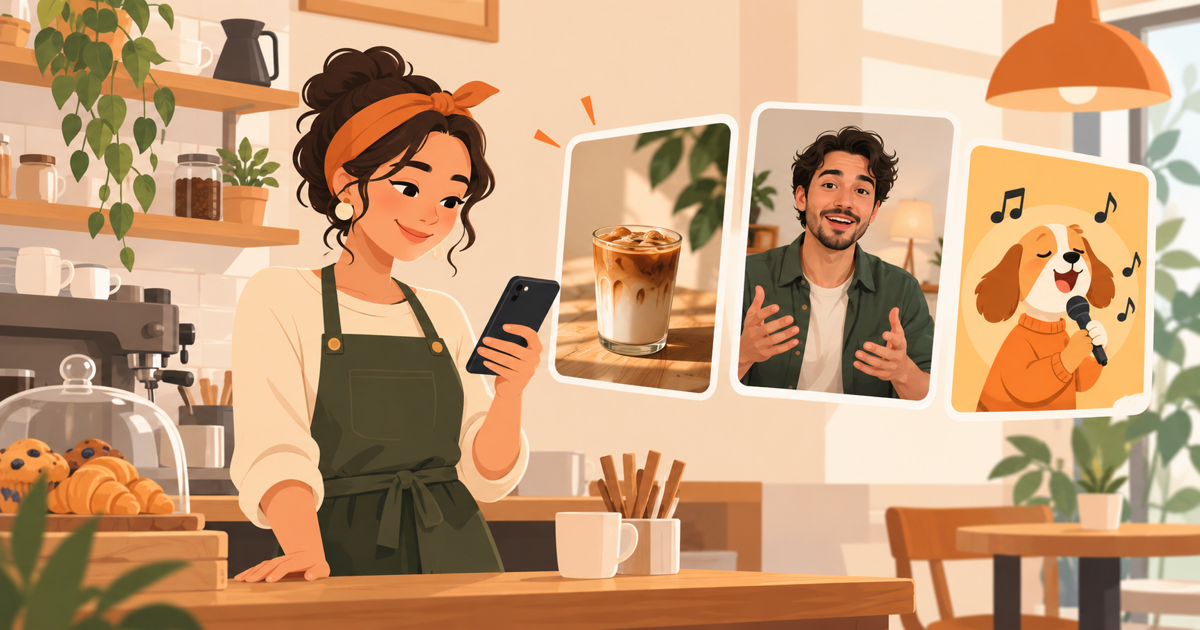
Song ads, UGC ads and image ads differ most in what they cost to make, how fast you can get one, and what they are good at. An image ad wins on speed and cost, a UGC ad wins on trust, and a song ad wins on being remembered.
An image ad is a single still picture with a headline and a short line of text. A UGC ad (short for user-generated content) is a short video of a real person, usually a paid creator, talking about or using your product on their phone. A song ad is a short vertical video where an original song about your business carries the message, with every word shown on screen.
| Image ad | UGC ad | Song ad | |
|---|---|---|---|
| What it is | One still picture with a headline | A real person on a phone camera talking about you | An original song with an AI singing voice, a cartoon video and every word on screen |
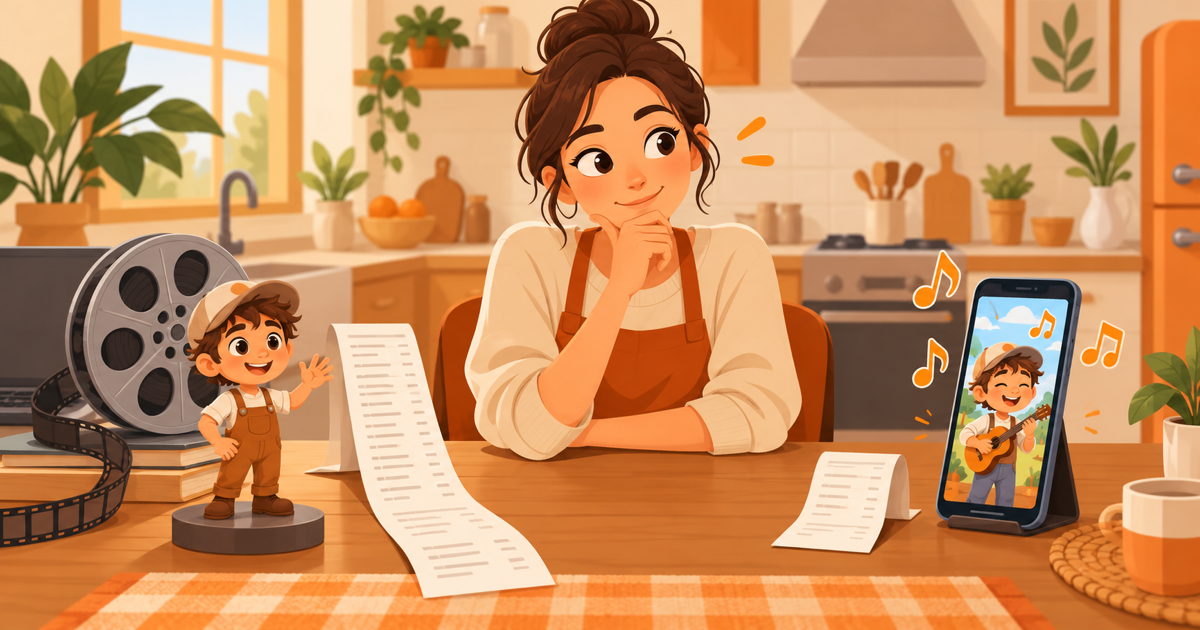
| Cost to make | Your time, or a designer's fee | Most creators charge $150 to $300 per video, plus 30 to 50% for usage rights | Done-for-you services from about $100; studio jingle $800 to $2,500 before video |
| Time to make | About an hour, say most respondents in an undated Databox survey | Days to weeks: brief a creator, ship a product, wait for filming | About 3 days from a done-for-you service; weeks from a jingle studio plus an animator |
| Works with sound off | Yes, there is no sound | Only with captions | Yes, every word is on screen |
| Good at | Testing offers and headlines, reminding past visitors | Trust and proof: a person using the product | Getting your name remembered without you on camera |
| Skip it when | The offer needs explaining or a story | A stranger cannot honestly review your service | The moment is serious, the offer needs a demo, or your customers would hate the music |
One honest note before you pick: the offer matters more than the format. A great deal in a plain photo will beat a weak deal in any video.
Get a musical video ad made for your business for $97 → A catchy song about your business, turned into a 3D animated video ad. Done for you in 72 hours.
Is video really cheaper than an image ad on Facebook?
Meta's own tests show vertical video with sound costing less per result than image ads in Reels. Small public tests disagree with each other, though, so the winner for your business depends on your offer, your audience and where the ad shows.
Meta says Reels default to sound-on, and on the same page it reports that 9:16 vertical video with audio, with key messages in the safe zone, had 34.5% lower cost per result than image ads. That figure comes from 15 split tests of Reels-only campaigns, and Meta lists the advertisers as online shops, retailers and consumer brands, not local service firms.
Cost per result is what you pay, on average, for each lead, sale or click you asked Meta to find. The safe zone is the middle of the screen, away from the app's buttons and captions.
Smaller public tests point both ways: an image ad won AdEspresso's 2019 test and video won at Disruptive Advertising in 2017, but both are old and each covers one company's accounts. Format alone does not decide the result.
For the full image vs video debate, see our guide to UGC ads vs image ads. The rest of this article sticks to the newer question: where a song fits next to the other two.
When is an image ad the smart first buy?
An image ad is the smart first buy when you have a clear, simple deal and want to test it cheaply. You can make several in an afternoon and learn which headline gets clicks before you pay for any video.
Image ads work well for:
- Testing offers. A cleaning company can try "First clean half price" against "Free oven clean with your first booking" and let the clicks decide.
- Retargeting. Retargeting means showing ads to people who already visited your website or engaged with your page. A simple reminder photo is often enough.
- Simple, seasonal deals. A heating and cooling (HVAC) tune-up before summer or a cafe's new lunch menu suits one strong photo.
Two headline patterns you can copy:
- Problem plus fix: "Dripping faucet? [Your Name] can be there today."
- Offer plus deadline: "Free gutter check with any roof repair, booked by Friday."
Skip the image ad when the offer needs explaining or your real problem is that people forget your name. A still photo rarely sticks in the memory.
Pro tip: make three versions that change only the headline. If you change the photo, the headline and the offer at once, you will not know what worked.
When does a UGC ad earn its fee?
A UGC ad earns its fee when a real person can honestly show your product working, such as a skincare item, a meal kit or a class at your gym. It is a weaker buy for services a stranger has never used, because viewers can usually tell.
The creator fee in the table is only part of the bill. Usage rights, which are your permission to run the creator's video as a paid ad, add 30 to 50% on top, so one video lands at roughly $195 to $450. Our guide to how much a UGC video costs in 2026 breaks that down further.
UGC is a poor fit for:
- Professional services. A creator who never sat in your dental chair or hired your law firm is not real proof, and passing them off as a client is misleading.
- Regulated claims. Health, money and legal ads face stricter rules, so read Meta's Advertising Standards before you show any before-and-after.
There is a free version, too. If you film yourself on your phone, that counts as UGC, and it costs nothing but nerve. A simple owner-filmed script for a gym looks like this:
"Hi, I'm [Your Name] and I own the gym on [Street]. Here is what your first week with us looks like. Monday you meet your coach. By Friday you have done three classes. Tap below to book a free first session."
When does a song ad make sense?
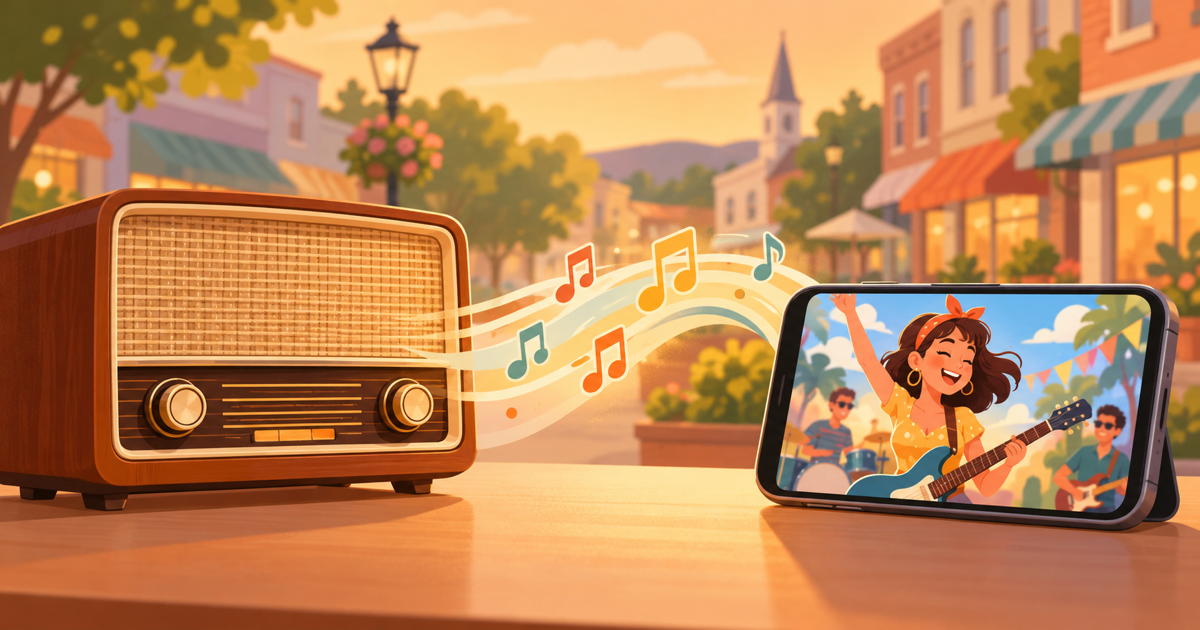
A song ad makes sense when you need people to remember your name, your offer fits in one line, and you would rather not be on camera. Of the three formats, it is the one built for memory as much as for clicks.
The research on memory points the same way. System1 reported in 2026 that jingles and sonic devices both rank in the top three types of brand assets for helping people link an ad to the right brand.
Original music seems to matter, too. In a July 2022 roundup, TikTok cites 2021 MediaScience research finding that custom music led to higher recall and brand recognition than music people already knew.
Be clear about what that covers: big-brand TV and TikTok studies, not small Facebook campaigns. Nobody can promise a song ad will win for you.
Ask who is singing before you buy. Many low-cost song ads use an AI singing voice rather than a session singer, so ask any seller which one you are getting.
Two original hook lines to show the idea:
- Electrician: "Lights flicker when the AC kicks on? [Your Name] will have it fixed by dawn."
- House cleaner: "Guests at six and the floor's a mess? [Your Name] makes it shine, you take a rest."
A song ad is the wrong pick when the moment is serious, like an injury lawyer, a funeral home or a clinic for serious illness. It is also wrong when the offer needs a demo, or when your own face is what people buy.
Taste matters as well. In a 2024 piece for Durham University, music psychologist Dr Kelly Jakubowski points to research where music people strongly disliked put them off choosing a product. Pick a style your customers would actually play.
Not sure whether to sing it or say it? Our guide to jingle vs voiceover ads walks through that choice.
Which is the best type of Facebook ad for small business in your trade?
The best first ad for your trade is usually a simple offer customers can act on now, with a song added when you need people to remember your name. Here is a sensible order for common local businesses.
| Business | Start with | Add when you need recall | Why |
|---|---|---|---|
| Plumber or HVAC | Image ad with a seasonal offer | Song ad | When a pipe bursts, people often call the first name that comes to mind |
| Roofer | Image ad with a seasonal offer | Song ad | Roofs are bought rarely, so your name has to last |
| Dentist | Image ad with a new-patient offer | Song ad | A clear offer first, then a friendly tune for recall |
| Restaurant or cafe | Image ad with a food photo | Song ad | Food sells by sight first |
| Gym or fitness studio | Owner-filmed UGC | Song ad for a January push | People want to see the coach and the room |
| Online shop or product brand | UGC ad | Song ad | A person using the product is the proof |
| Accountant or realtor | Image ad with a seasonal offer | Song ad | Names blur together |
| Injury lawyer or funeral home | Image ad or a plain spoken video | Skip the song | A cheerful tune clashes with a hard moment |
The song ad is never the first buy in this table. It earns its place once you have an offer that works and need people to remember who made it.
Hear the song ads we have made → Click any video to watch with sound.
What does it cost to test all three?
Testing all three formats costs two things: the price of making each ad and the budget to run them. Making one of each usually comes to a few hundred dollars plus some of your time, before any ad spend.
| Ad | Cost to make one |
|---|---|
| Image ad | Your time, or a designer's fee |
| UGC ad | About $195 to $450 with usage rights |
| Song ad, studio route | $800 to $2,500 for the jingle, plus $1,000 to $5,000 per minute for most animation styles, more for 3D |
| Song ad, done for you | $97 for one ad from us, or $297 a month for 5 new ads |
Our song ads are ready in 72 hours, or 24 with the $47 fast-track, and the singing voice is AI. Every order includes 1 round of remakes and a money-back guarantee. We make the ad and you own it, but we do not run it, so you or whoever manages your ads sets it live.
Say you run a two-van plumbing firm. You make three image ads yourself, book one creator video at about $300 with rights, and order one done-for-you song ad. That is roughly $400 to make, plus an afternoon of your time and the ad budget in the test below.
How to test three ad types on Meta without fooling yourself
The fair way to compare song, UGC and image ads is a three-way split: same offer, same audience, same budget, one ad set per format. A clean test is the only reliable way to find the best type of Facebook ad for small business budgets like yours.
Step 1: Make three ads that sell one offer
Build one image ad, one UGC ad and one song ad, each ending on the same offer and button.
Step 2: Set up three ad sets
Put one format in each ad set in Meta Ads Manager, with the same audience and daily budget for all three.
Step 3: Run it for a week
Lilach Bullock's 2026 guide suggests three ad sets over one week for £150 to £200 (about $200 to $270). A smaller budget needs longer to show a winner.
Step 4: Judge on cost per enquiry
Divide what each ad set spent by the calls, bookings and sales it brought in, then keep the winner. To test one song ad against your current best ad instead, see what a song ad is and how to test one.
Frequently asked questions
Are carousel ads a good choice for a small business?
A carousel ad shows up to 10 swipeable images or videos in one ad, so it suits businesses with several products or service tiers. In a small 2019 AdEspresso test, the carousel cost 2.8 times as much per lead as the image ad. Test a carousel rather than assume it will win.
Is the singer in a song ad a real person?
In our song ads, the singer is an AI voice, not a person, and so is the singer in any AI music tool. Violet Recording's produced jingles in the $800 to $2,500 range include a session vocalist. Ask any seller which one you are getting before you pay.
Are Facebook lead form ads good for a small business?
Lead form ads can suit local service businesses that want quote requests. The University of Houston SBDC explains that they show a form already filled in with the person's contact details, instead of sending them to your website. Call or text each new lead quickly, while they still remember filling it in.
The short version
The best type of Facebook ad for small business owners is the one that fits the job. Image ads are fast and cheap, so use them to test offers. UGC ads build trust when a real person can show your product. Song ads help you get your name remembered without stepping in front of a camera.
Meta's data leans toward vertical video with sound in Reels, but small tests disagree, so do not take anyone's word for it. Make one of each, sell the same offer in all three, and let calls and bookings pick the winner.
Ready for an ad people remember? Get your song ad for $97, written, sung and animated for you in 72 hours, with a money-back guarantee.
Related Reading
- What Is a Song Ad? Who It Suits and What It Costs: A song ad is a short sung video ad about your business, with every word on…
- Music for Facebook Ads: What's Allowed and What Gets Remembered: Music for Facebook ads, explained: why trending songs get ads muted, what…
- Animated Video Ad Cost vs a Song Ad: Where Your Money Goes: Animated video ad cost for a 30-second social ad: published 2D and 3D studio…
- Custom Jingle for Small Business: What You Get and What to Ask: Buying a custom jingle for small business? Learn which files to get, 12…
- Song Ads from $97 →: A catchy song about your business, turned into a 3D animated video ad in 72 hours.
Want an ad people remember?
A catchy song about your business, turned into a 3D animated video ad. Written, sung and animated for you in 72 hours, with a money-back guarantee.
Get My Song Ad — $97 →